Harnessing the Power of Compost for Lawns
The secret to green grass is organic topdressing for lawns.

A well-maintained lawn adds beauty and charm to any home, but achieving that vibrant green carpet can be a challenge. While chemical fertilizers have long been the go-to solution, an increasing number of homeowners are turning to a more sustainable and natural approach—compost. In this blog post, we will explore the benefits of using compost for lawns and provide you with practical tips on how to harness the power of compost to transform your yard into a thriving oasis of green.
What is Compost and Why Is It Beneficial?
Compost is a nutrient-rich organic matter created through the process of decomposing organic waste, such as kitchen scraps, yard trimmings, and leaves. It serves as a natural fertilizer and soil amendment, delivering a wide range of benefits to lawns. Firstly, compost enriches the soil by improving its structure, increasing its water-holding capacity, and enhancing drainage. This leads to healthier root development and improved overall turf quality. Secondly, compost introduces essential nutrients gradually, promoting balanced growth and reducing the risk of nutrient runoff and pollution. Finally, compost supports the growth of beneficial microorganisms in the soil, creating a thriving ecosystem that aids in disease suppression and pest control.
How to Use Compost for Your Lawn
Incorporating compost into your lawn care routine is a straightforward process. Here are some key steps to follow:
1. Soil Testing:
We only recommend soil testing if you want to benchmark your soil’s pH level and nutrient composition before and after applying compost. Adding nutrient-rich humus will improve your lawn quality regardless, so avoid analysis paralysis and just add the compost.
2. Topdressing:
Topdressing is the process of spreading a thin layer of compost evenly over the lawn's surface. Use a rake or a compost spreader to distribute the compost, aiming for an application depth of about 1/4 to 1/2 inch. Avoid smothering the grass by leaving the leaf blades exposed.
3. Timing:
Warm-season grasses like Bermuda and Zoysia will benefit most from applying compost in the summer. Cool-season grass like Fescue should be treated with compost in the fall.
4. Aerating:
To maximize the benefits of compost, consider aerating your lawn before applying it. Aerating involves creating small holes in the soil to improve air circulation, water penetration, and nutrient absorption. This allows the compost to reach the root zone more effectively.
5. Watering:
After applying compost, water your lawn thoroughly to help the compost settle into the soil. This will ensure that the nutrients are properly absorbed and distributed. Watering deeply and infrequently promotes deep root growth and strengthens the turf.
6. Maintenance:
As the compost breaks down and integrates into the soil, you can continue to follow your regular lawn care routine, including mowing, watering, and organic weed control. The compost will gradually improve soil health, leading to stronger, more resilient turf.
Best Compost for Lawns
Finding a reliable source of high-quality compost is essential for successful lawn care. Here are some options for purchasing compost topdressing:
Local Garden Centers/Nurseries:
Many garden centers and nurseries offer compost for sale. Visit your local gardening supply stores and inquire about their compost products. They may have a variety of options, including different compost blends suited for lawns. Here in the South, we recommend buying high-quality compost from
SuperSod. Here in the Triangle, NC area, SuperSod has locations in Raleigh and Cary. For folks in Pittsboro and Chapel Hill, we recommend
Country Farm and Home.
Municipal Composting Facilities:
Check with your local municipality to see if they operate composting facilities. These facilities often sell compost made from locally collected organic waste. Purchasing from them supports the recycling efforts of your community. In Wake County, use
Raleigh Yard Waste Center.
Online Suppliers:
Numerous online suppliers specialize in delivering compost and other gardening products straight to your doorstep. Read customer reviews, compare prices, and ensure the supplier follows sustainable composting practices.
Landscaping Companies:
Some landscaping companies produce their own compost and may have surplus supplies available for purchase. Contact local landscapers to inquire about the availability of compost. Of course, if you hire a professional to apply compost to your yard, they’ll likely supply the compost as part of the service.
DIY Composting:
If you have the time and resources, consider composting your own organic waste. This allows you to create a sustainable source of nutrient-rich compost for your lawn. Read more about how to compost in our blog post
Why Is Composting Important.
Compost Tea vs. Top Dressing
As part of our
organic weed control and fertilization service, we spray compost tea on your yard each time it’s treated. Compost tea is a liquid extract made by steeping compost in water, while compost top dressing involves applying compost directly to the surface of the soil or lawn. Both methods offer unique benefits for soil health and plant growth.
Compost tea and compost top dressing offer distinct advantages, but they can also be used together for maximum benefits. Here are a few points of comparison:
Nutrient Delivery:
Compost tea provides a quick and direct nutrient boost, while compost top dressing provides a slow-release supply of nutrients over time.
Microbial Populations:
Compost tea introduces a diverse population of beneficial microorganisms, while compost top dressing enhances soil microbial activity through the addition of organic matter.
Application Methods:
Compost tea is typically applied as a liquid spray to the foliage and soil, while compost top dressing involves spreading compost directly on the soil surface.
Targeted Use:
Compost tea is often used for foliar application and disease suppression, while compost top dressing is primarily used for soil conditioning, moisture retention, and organic matter enrichment.
Both compost tea and compost top dressing offer valuable benefits for soil health and plant growth. Compost tea provides a concentrated nutrient and microbial boost, while compost top dressing gradually releases nutrients and enriches the soil with organic matter. Consider using both methods in combination to maximize the advantages and promote a healthy, vibrant lawn or garden. We highly recommend consistently spraying your lawn with compost tea as well as an annual application of compost topdressing.
Should You Hire a Professional or DIY with Lawn Compost Spreader
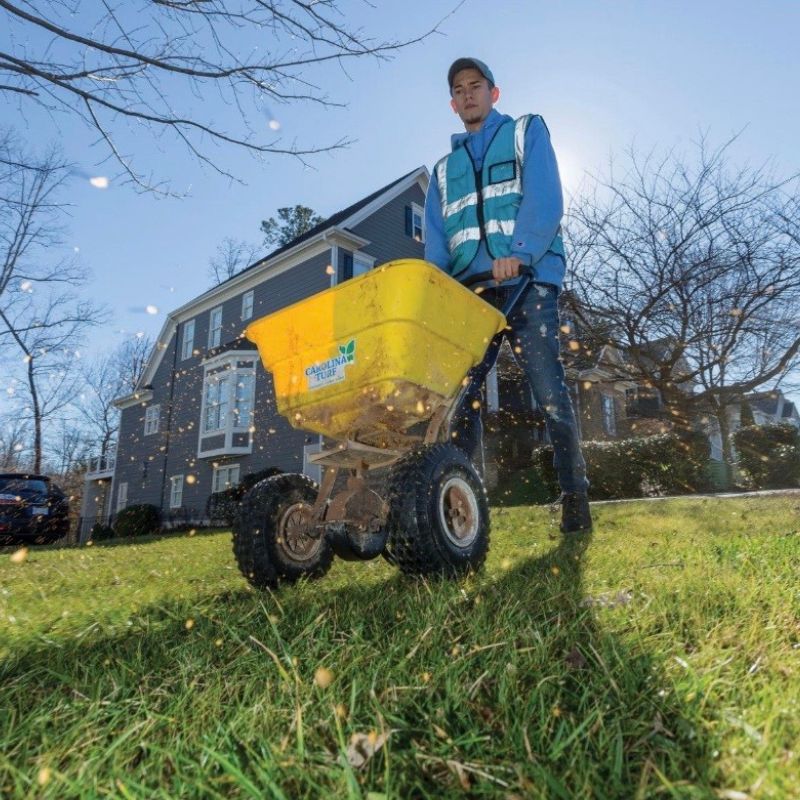
The choice between DIY compost top dressing application and hiring a professional depends on factors such as your budget, time availability, size of the lawn,, and your comfort level with the process. If you have a smaller space, enjoy hands-on work, and want to save costs, DIY application can be a rewarding option. On the other hand, hiring a professional can be beneficial for larger areas, when expertise and efficiency are prioritized, or when you prefer to delegate the task to experts.
You don’t have to get fancy and purchase or lawn compost spreader. Simply use a wheelbarrow and a basic dirt rake to spread the compost topdressing on your lawn. However, if you choose to purchase a lawn compost spreader, here are some options from
Amazon.
Revitalize Your Yard with Compost for Lawns
Using compost for lawns offers numerous benefits for both the environment and your turf's health. By incorporating compost into your lawn care routine, you can improve soil quality, reduce the need for synthetic fertilizers, and support a thriving ecosystem. Embrace the power of compost, and watch your lawn transform into a lush and vibrant landscape that is both beautiful and environmentally friendly.
Related content:
Pet Safe Weed Killer Does Exist and It Works
Toxic Lawns: The True Price of a Pretty Yard
The Hazards of Many Herbicides and Pesticides