Pesticides with a Side of Parkinson's
How many times do we have to go through the same song and dance? Chemical manufacturers push dangerous products on the market that later prove to endanger our environment and make people sick. The chemical only gets pulled off the market once we’re outraged enough.

It happened with the DDT ban in 1972. PCB was pulled off the market in 1979. Lead in gasoline was phased out by 1996. Asbestos turned out to cause cancer.
A growing mountain of research now connects several common chemicals to a staggering increase in the risk of Parkinson’s disease. We now have clear evidence that certain chemicals actually target and kill the specific neurons in your brain responsible for movement and coordination.
Parkinson’s Disease Pesticide Connection
Parkinson’s disease is a progressive neurological disease where certain brain cells, specifically those producing dopamine, are damaged and die. The symptoms include tremors, muscle stiffness, slowed movement, and difficulties with balance and posture. The disease typically begins between the ages of 50 and 70 and progresses slowly. While there’s no cure, medical intervention and physical therapy can ease the symptoms.
Scientific data is showing a 2.5-fold to 2.7-fold increase in Parkinson’s risk for certain chemicals. To put that in perspective, a 150% to 170% increase in risk for a major neurological disease is considered a massive signal in public health research.
Paraquat: Another One Bites the Dust
Paraquat is a non-selective weed killer, meaning it destroys just about any plant tissue it touches. While it is primarily used in large-scale agriculture for crops like corn and soybeans, it has also been a "restricted use" tool for clearing large residential areas or commercial properties before new turf is laid.
The data on paraquat is terrifying. A hallmark study published in Environmental Health Perspectives found that people exposed to paraquat are roughly 2.5 times more likely to develop Parkinson’s disease. It works by creating "oxidative stress"—essentially a chemical fire that burns through the dopaminergic neurons in the brain.
The pressure to pull this pesticide off the market has become so intense that a major manufacturer is finally waving the white flag. As of early 2026, Syngenta announced it would stop production of paraquat by the summer. When a company voluntarily pulls a profitable product from the market, you know the safety evidence has become an undeniable liability. If it's too dangerous for them to keep making it, it definitely doesn't belong anywhere in our environment.
Long-term residential exposure to chlorpyrifos increases Parkinson’s risk by more than 2.5 times.
Chlorpyrifos: Nerve Agent on the Fairway
Chlorpyrifos belongs to a class of chemicals called organophosphates. These were originally developed as nerve agents during World War II, so their "efficiency" at attacking nervous systems is built into their DNA. While residential use was restricted years ago, it is still widely used in commercial applications and products for golf courses and large sod farms.
This chemical dismantles your nervous system. A
2026 UCLA Health study discovered that long-term residential exposure to chlorpyrifos increases Parkinson’s risk by more than 2.5 times.
The mechanism is fascinating and frightening. Chlorpyrifos disrupts a process called "autophagy"—the brain’s internal trash-clearing system. When this process breaks down, toxic proteins clump together and kill off the cells that produce dopamine. Without that dopamine, the body loses its ability to control smooth, purposeful movement.
Atrazine: Turf Builder Toxin
Atrazine is one of the most widely used herbicides in the United States, especially in the South, where Centipede and St. Augustine grasses are common. Formulated for homeowners with those grass types, products like Scott’s Turf Builder Bonus S use Atrazine as the primary active ingredient.
Atrazine doesn't just stay on weeds; it leaches into the soil and often ends up in groundwater. This chemical acts as a persistent neurotoxin. Research indicates that Atrazine interferes with the dopamine system by disrupting how neurons communicate and maintain their internal balance. Recent
studies presented at the American Academy of Neurology have shown that counties with the highest atrazine usage also show significantly higher rates of Parkinson’s disease, with some data suggesting a 31% increase in risk for those with high exposure.
Diquat: The New Roundup
As glyphosate (the original ingredient in Roundup) faced a wave of litigation, many "new and improved" formulations started hitting the shelves. One replacement chemical is Diquat.
Diquat is a chemical cousin to paraquat. While it acts faster on the leaf, its internal effects on humans are equally concerning.
Studies suggest that diquat exposure may contribute to neurological disorders such as Parkinson’s disease, respiratory damage, kidney and liver toxicity, eye injuries, and skin burns.
Trifluralin: A Toxic Pre-Emergent
Trifluralin is a pre-emergent herbicide used to stop weed seeds from germinating in the spring, found in products such as Preen Garden Weed Preventer. A groundbreaking 2023 study used human stem cells to test which pesticides were most toxic to dopamine-producing neurons, again those involved in Parkinson's disease. Trifluralin was identified as one of the ten most toxic chemicals tested and appears to be a "driver" of mitochondrial dysfunction in human brain cells. When the mitochondria, or the powerhouses of your cells, fail, the neuron dies.
Permethrin: The Mortal Mosquito Mist
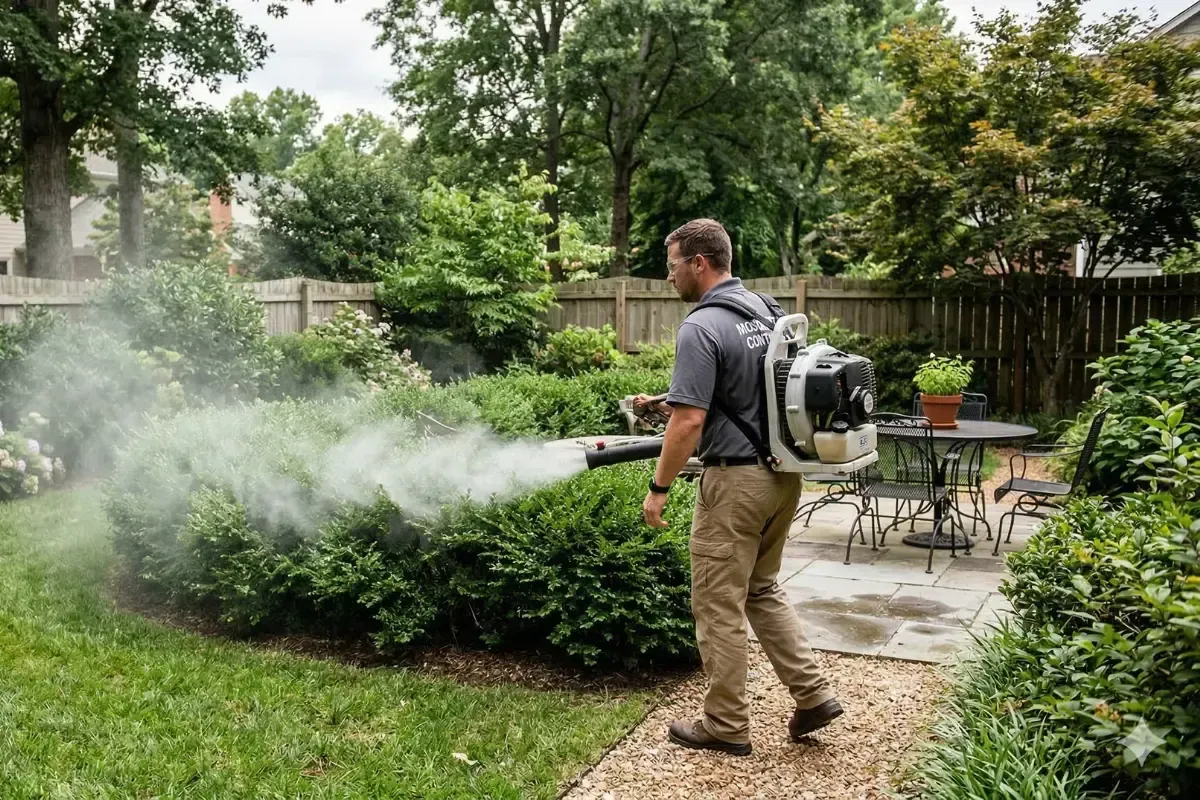
Permethrin is the go-to chemical for many mosquito sprays. We’ve written about the dangers of traditional mosquito sprays and how they’re falsely marketed as “safe” because it is derived from a synthetic version of crushed chrysanthemums. Research has shown that workers who handle permethrin without proper protection have quadruple the risk of developing Parkinson’s. Even more alarming, counties with high agricultural use of permethrin see Parkinson’s mortality rates nearly 80% higher than control counties.
Choose Organic Instead
The takeaway here isn't to live in fear, but to live with awareness. Every chemical listed above is designed to kill living organisms by disrupting vital biological processes. Humans are biological organisms, too. The side effects of a pristine lawn shouldn't include a devastating neurological diagnosis decades down the line.
At Carolina Turf, we believe in a different approach. Moving toward organic, non-toxic alternatives is a vital step in protecting the health of your family and your community.
Sign up for our organic lawn care and pest control services here.