Is Mosquito Spray Safe?
When thinking about getting mosquito fogging, your goal is probably to enjoy your backyard without being eaten alive. It’s a valid concern, especially since mosquitoes are disease vectors for West Nile virus and Eastern equine encephalitis, and heartworm—a life-threatening parasite for your pets. Local municipalities like Durham, NC even schedule city-wide spraying in an effort to protect public health from these risks. But what about the risks from the insecticide being used in mosquito fogging to humans, pets and pollinators?
How Traditional Mosquito Sprays Affect Pollinators
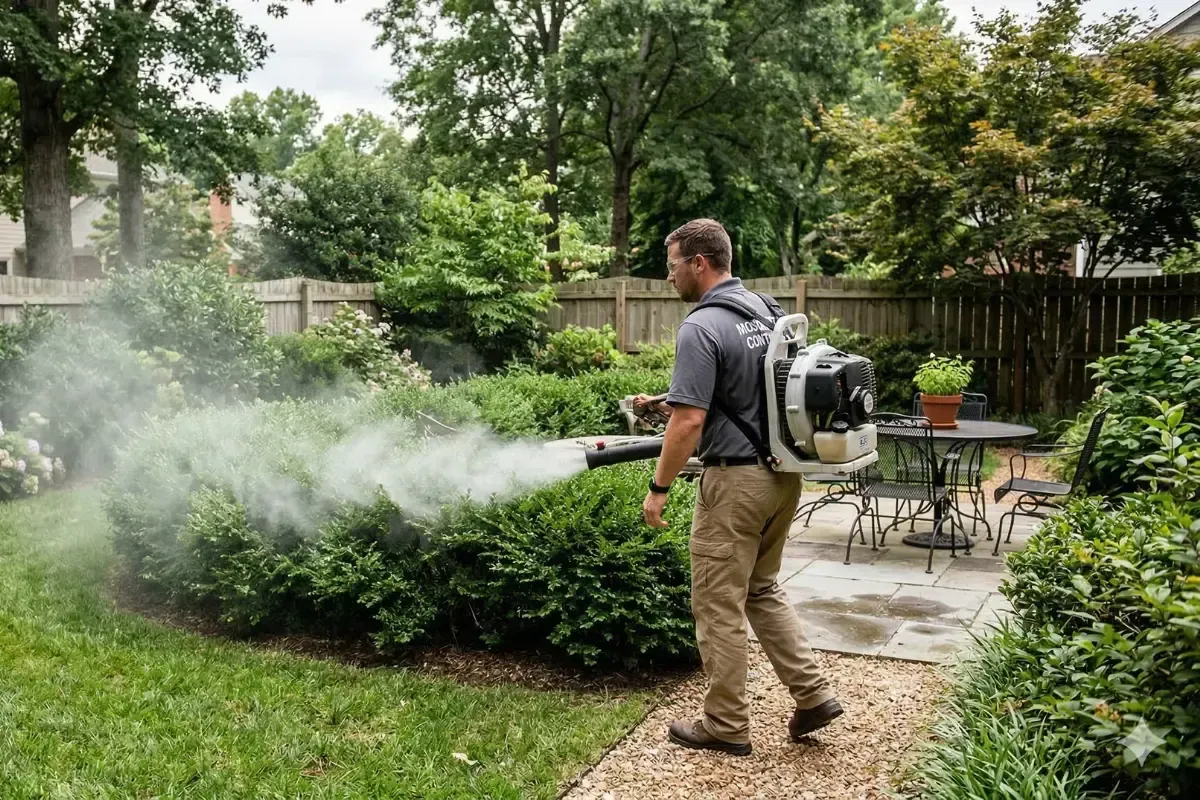
When a company sprays a standard mosquito pesticide, they are almost certainly using a class of chemicals called pyrethroids. These are synthetic, lab-created versions of pyrethrins, which are compounds naturally found in chrysanthemum flowers.
You might hear these companies describe their sprays as “natural” because they derived the chemistry from a flower. Don’t be fooled. These synthetic pyrethroids are engineered specifically to be more powerful, last longer in the sun (they don't degrade as quickly as natural pyrethrins), and are far more potent than their natural counterparts.
Most insecticides are neurotoxins that affect a nerve cell’s ability to send signals. They don’t differentiate between species. If it’s an invertebrate (which means it has an exoskeleton), these sprays will kill it, including:
- Honey bees
- Bumble bees and other native bees
- Butterflies
- Caterpillars (the larval stage of those butterflies)
- Ladybugs
- Fireflies
When you blanket your bushes, trees, and grass in these chemicals to create a barrier, you are essentially making your yard toxic to the very creatures we rely on for a healthy ecosystem. The long-lasting nature of these synthetic pyrethroids means they continue to kill beneficial insects for days or weeks after the application. Your blooming flowers, which should be a haven for pollinators, become lethal traps.
What If Your Neighbor Is Spraying For Mosquitos
For years, many people suspected these barrier treatments were devastating local pollinator populations, but we didn’t have clear data. Now, we do.
A major study, conducted by the Xerces Society for Invertebrate Conservation and the University of Nevada, Reno, looked specifically at how residential mosquito sprays move through a community. The findings were alarming and provided concrete evidence of the harm we are discussing.
The CHARGE study (UC Davis) found that pregnant women living within a mile of agricultural pyrethroid applications had a 60% to 87% increased risk of having a child with autism or developmental delays.
Researchers used silicone bands placed on vegetation to absorb whatever chemicals were present in various yards. They compared yards directly sprayed by private mosquito control companies, yards adjacent to those properties (meaning neighbors who didn’t spray), and yards in reference sites with no known history of treatment.
Here are some of the critical facts from the Xerces study:
Lethal Levels for Bees:
The insecticide levels found on vegetation in treated yards were, on average, over six times the lethal dose for a honey bee. Some samples were up to 34 times the lethal dose.
Pesticide Drift:
The research showed that these chemicals do not respect property lines. In the study, 75% of the neighboring yards that were never sprayed still tested positive for pyrethroid contamination. In these "non-treated" areas, the concentration of pesticides reached as high as twice the lethal dose for honey bees. Even if you choose to keep your yard organic, your neighbor’s chemical barrier can still turn your garden into a dead zone for pollinators.
Mosquito Sprays Pose a Risk to Human Health
It’s reasonable to ask if these chemicals that are so deadly to small insects also pose risks to us and our pets. Pyrethroids are generally marketed as safe for humans, but that statement deserves scrutiny.
Various peer-reviewed studies highlight several specific health concerns associated with chronic or low-level exposure to synthetic pyrethroids:
- Endocrine Disruption: Research has identified pyrethroids as endocrine disruptors that interfere with natural hormones like estrogen and testosterone. A study published in Environmental Health found that higher concentrations of pyrethroid metabolites in men were associated with lower testosterone levels and altered reproductive hormone balance. For children, this interference can delay physical development and impact long-term reproductive health.
- Neurotoxicity and Brain Development: Because pyrethroids are designed to attack the nervous systems of insects, they can have similar effects on the developing human brain. The CHARGE study (UC Davis) found that pregnant women living within a mile of agricultural pyrethroid applications had a 60% to 87% increased risk of having a child with autism or developmental delays.
- ADHD and Behavioral Issues: A study of U.S. children (ages 8–15) found that those with detectable levels of pyrethroid metabolites in their urine were twice as likely to display ADHD symptoms, particularly hyperactivity and impulsivity. This suggests that even "routine" exposure can have a measurable impact on a child's focus and behavior.
- Respiratory Issues and Allergies: Pyrethroids are known irritants. Exposure has been linked to "contact dermatitis" and asthma-like reactions. This is a significant concern for families with existing allergies, as these chemicals can trigger respiratory distress that often goes unreported because the homeowner doesn't realize they were exposed to a neighbor's "barrier" spray.
- Carcinogenic Potential: The EPA has classified some pyrethroids, such as permethrin (most commonly used in mosquito sprays), as "likely to be carcinogenic to humans" based on evidence of lung and liver tumors in laboratory studies.
We see this caution reflected in the warnings issued by local governments. When Durham County scheduled its mosquito treatments in 2025, they describe the product as low-risk, yet they advise residents to take significant precautions:
- Stay indoors during the application and for 20 minutes after.
- Keep windows and doors closed and turn off window-unit ACs.
- Bring pets inside and cover ornamental fish ponds.
- Rinse homegrown vegetables thoroughly before eating.
- Wash any skin that comes into contact with wet surfaces.
If these sprays were as harmless as the marketing suggests, you wouldn't need to hide your family and cover your pond. Furthermore, the city mentions targeting "pyrethroid-resistant" mosquitoes (which refers specifically to permethrin, mentioned above). This is an admission that our current chemical strategy is failing. By blanket-spraying, we are accidentally breeding "super-mosquitoes" that have evolved to survive these toxins.
How to Get Rid of Mosquitos Without Toxins
The Asian tiger mosquito (Aedes albopictus) is an invasive species that isn't native to North Carolina. Unlike our native mosquitoes, which are primarily active at dawn and dusk, Asian tiger mosquitoes feed all day long. They are persistent and aggressive, making them especially difficult to avoid without constant intervention.
Barrier sprays do not provide long-term population reduction of this species because new adults are constantly emerging from container habitats, like old tires, buckets, gutters, or clogged drainage ditches. Since we must manage these mosquitoes to prevent illness, the question shouldn't be whether we should control them, but how we should do it responsibly.
A better way to address mosquito-borne illness and annoying populations involves a multi-pronged strategy:
- Draining Standing Water: The most critical step. Since Asian tiger mosquitoes breed in containers, eliminating standing water sources on your property is the absolute best way to reduce their numbers. Check for water in hidden spots like clogged gutters, corrugated drainage pipes, saucers under flower pots, and even the folds of outdoor tarps. If you eliminate the water, you eliminate their habitat.
- Targeting Larvae: For water sources you can’t drain—like rain barrels, birdbaths, or low spots in drainage pipes—we recommend using Bti dunks. Bti is a naturally occurring, OMRI-listed soil bacterium. It produces a protein that is only toxic to the highly alkaline digestive systems of mosquito larvae. Because humans, pets, and pollinators have acidic digestive systems, the protein remains inactive and harmless to them. You can find these at most local hardware or feed stores; just drop one in the water once a month to break the life cycle.
- Using Smarter, Safer Repellent: When adult mosquitoes are already active, avoid broad-spectrum toxins. We focus on masking the scents that attract them in the first place. By using a natural repellent that confuses their sensors rather than a chemical that blankets the ecosystem, you can enjoy your yard without the toxic trade-off.
Garlic Spray: A Safer, Smarter, and Better Way
This brings us to what we believe is the truly better option. We understand the desire to reclaim your yard, but we refuse to sacrifice the ecosystem to do it.
That’s why Carolina Turf chooses to use an all-natural mosquito repellent made from garlic.
This probably sounds a little simple, but the science behind it is fascinating. A mosquito’s sense of smell is incredibly keen; that’s how they find you. The active sulfur compound in garlic is one of the smells that they absolutely hate. When applied to your landscape, it effectively masks the natural human odors (like lactic acid and carbon dioxide) that mosquitoes use to locate their prey.
Here is why this natural approach is superior:
- It Repels: This spray creates a natural "no-fly zone" that makes your yard an attractive place for you, but an unattractive place for mosquitoes.
- Does Not Kill Pollinators: Unlike synthetic neurotoxins that kill bees on contact, garlic is a repellent. It doesn't stay in the environment as a lethal residue. While we always recommend avoiding spraying directly onto blooming flowers while bees are active, you can rest easy knowing you aren't turning your yard into a toxic "dead zone." Garlic allows you to repel mosquitoes by masking the scents they track, while leaving the nervous systems of our local honey bees and butterflies intact.
- Safe for Your Family and Pets: There are no toxic chemicals to worry about. You don’t have to keep kids or dogs inside for hours or days after an application. We can spray, and you can enjoy your yard immediately (although it might smell a bit like an Italian restaurant). It is an environmentally sound solution that works.
We want you to be safe from disease and comfortable in your own space and understand the value of a mosquito-free yard. But we also believe strongly that we have a responsibility to use methods that align with a healthy, functioning environment.