How to Convince Your Spouse to Switch to Organic Lawn Care
While you’re shopping for organic food, cleaning with non-toxic household products, and listening to alternative health podcasts on repeat, your husband is outside bathing in Roundup.

Okay, maybe not quite, but the yard is definitely his domain, and he’s about as far from crunchy as jello. He cares about a green, mowed lawn with no weeds in sight. We want that for him, too. How, then, do you encroach on his outside kingdom with the outlandish suggestion of organic lawn care?
Many husbands assume that choosing the safe option means settling for a yard full of dandelions and clover. Winning this debate requires a bit of homework, but luckily for you, we’ve done it for you! With the help of this blog post, you’ll be able to dismantle the idea that synthetic chemicals are a harmless necessity and replace it with the reality of what these products do to the human body and the soil.
Synthetic Fertilizers
Most men are conditioned to believe that a green lawn requires a specific chemical ritual. They see a bag labeled "Step 1" and assume it’s the only way to achieve a professional look. “Weed and feed” even rhymes. “The way it’s always been done”–mindset treats the lawn like a patient on life support rather than a living ecosystem. Synthetic fertilizers act like a temporary steroid shot for grass, but they don’t help the soil microbes needed for the long-term health of your grass.
By feeding the soil, we create a lawn with deep, resilient roots that can actually survive a North Carolina summer without constant chemical intervention. When the soil is healthy, the grass grows thick enough to naturally crowd out weeds.
Toxic Herbicides
Back to the weed-part of that weed and feed. Besides nitrogen to “feed” your lawn, weed-and-feed products contain herbicides such as 2,4-D, dicamba, and MCPP. Below is a quick recap of how these chemicals affect our bodies. Pay special attention if you have a dog or kids, or if you're planning to have either.
"Recent epidemiological research has linked these common herbicides to a literal shrinking of male anatomy, with scientists warning that endocrine disruptors are causing a measurable decline in penis size and sperm volume across generations."
The Toxic Hit List
2,4-D (Dichlorophenoxyacetic acid)
2,4-D is the primary ingredient in almost every "weed and feed" product. It was also one of the two main ingredients in Agent Orange. The manufacturers had to find somewhere to dump it after destroying lives in Vietnam, so America it is. While the industry claims it is safe once dry, it is a known hormone disruptor and a possible carcinogen.
- The Risk: It has been linked to non-Hodgkin lymphoma and is frequently detected in indoor air and household dust after a lawn application.
- Household Impact: 2,4-D is easily tracked inside on shoes and paws, where it lingers in carpets and flooring for months. If you have a dog, teach him to pee in the toilet, I guess, to avoid walking on grass treated with 2,4-D.
Atrazine
Commonly used for weed control here in the South, Atrazine is a potent hormone mimicker. In 2002, Dr. Tyrone Hayes, a biologist at UC Berkeley, was hired by the chemical giant Syngenta (then Novartis) to study Atrazine. They expected him to prove it was safe. Instead, he found that this chemical caused male frogs to develop female reproductive organs. So not great for the male genitalia.
- The Risk: It is one of the most common contaminants in American drinking water. It interferes with testosterone production and has been linked to birth defects and low sperm counts in humans.
- Household Impact: Atrazine is highly mobile in soil, meaning it doesn't just stay on your lawn; it washes into the local water table and your neighbors' yards.
Dicamba
Dicamba is a highly volatile herbicide used to kill broadleaf weeds. It is notorious for "drift," meaning it can turn into a gas and travel long distances away from the target area.
- The Risk: Exposure has been associated with increased risks of liver and intrahepatic bile duct cancers.
- Household Impact: If a neighbor uses a "Triple-Action" weed killer, the Dicamba can drift off their lawn and settle into your house dust. Research has detected Dicamba in the indoor dust of homes long after the initial application, creating a persistent "low-dose" exposure for toddlers and pets who live on the floor.
Glyphosate (commonly known as Roundup)
Although often used as a spot treatment, glyphosate is the world's most widely used herbicide. As discussed in our previous blog
Does Weed Killer Cause Cancer (spoiler alert: it does), the legal and scientific tide has turned against this chemical. The Roundup available at your local Home Depot or Lowe’s no longer contains glyphosate, but it has been replaced with another concoction of toxic chemicals, including diquat, which is highly toxic and linked to potential organ toxicity. And the OG formulation is still available to your professional landscaper.
- The Risk: The World Health Organization classifies glyphosate as a "probable carcinogen." Internal documents show the manufacturer knew about the risks for decades while ghostwriting safety studies to keep it on the market.
- Household Impact: It is a systemic chemical, meaning it stays inside the plant tissue and soil, creating a long-term presence in your immediate environment.
MCPP (Mecoprop)
MCPP is a mainstay in "triple-threat" weed killers alongside 2,4-D and Dicamba. It works by mimicking growth hormones to force plants into a lethal growth spurt, but its effects on human biology are deeply concerning.
- The Risk: Flagged as a mutagen, MCPP can inhibit DNA synthesis—the process our bodies use to replicate and repair cells. It has been linked to reproductive damage and reduced fertility in laboratory studies.
- Household Impact: Like Atrazine, MCPP is highly soluble in water and migrates easily. Using it introduces a hormone-disrupting pollutant into your soil that can compromise the biological health of the men and children in your home.
Nontoxic Masculinity
Repeated exposure to these chemicals has been linked to declining testosterone levels, reproductive issues, and even physical changes in development. Beyond the frog studies, recent epidemiological research has linked these common herbicides to a literal shrinking of male anatomy, with scientists warning that endocrine disruptors are causing a measurable decline in penis size and sperm volume across generations. In studies on mice and marsupials, chronic exposure to Atrazine at levels considered "safe" by some regulators resulted in a 20% reduction in penis length.
Your lawn is where you grill, where your kids roll around, and where your pets spend their lives. Bringing those chemicals into your home on your shoes is a direct threat to everyone's health. Children and pets are much more vulnerable to lawn toxins because of their size and behavior. While an adult’s liver uses a specific set of enzymes to break down and flush out chemicals, a child’s system is still under construction, meaning those same toxins stay in their bloodstream longer and do more damage. Because their kidneys don't filter as efficiently, toxins can remain in a child's bloodstream for much longer, giving them more time to interact with developing organs.
A dog doesn't just walk on the grass; it licks its paws and fur and breathes in the dust kicked up from the soil. Research from Tufts University found that dogs in homes with professionally treated chemical lawns have a 70% higher risk of developing canine malignant lymphoma. A study published in the
Journal of the American Veterinary Medical Association revealed that Scottish Terriers exposed to lawns treated with 2,4-D and Dicamba were seven times more likely to develop transitional cell carcinoma.
How to Care for Your Lawn Instead
A yard should be a sanctuary, not a restricted zone marked by little warning flags. Carolina Turf's weed control and fertilization program works by regular feedings of your soil with fertilizer, as well as 8 yearly applications (every 5-6 weeks) of organic pre- and post-emergents. Our weed killer is made with soybean oil, citric acid, and coconut-based soap that effectively kills broadleaf weeds. We use corn gluten as a pre-emergent to prevent weeds such as poa. For driveway cracks and mulch beds, we use a higher concentration of our organic weed killer (see bed maintenance in our service catalogue).
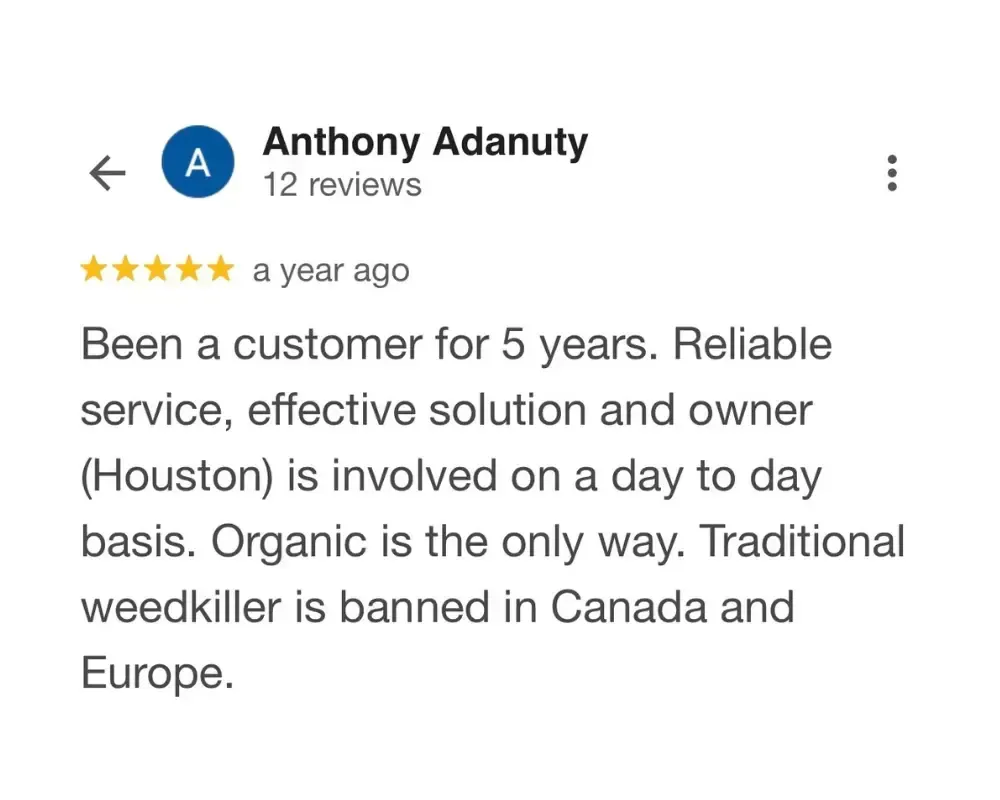
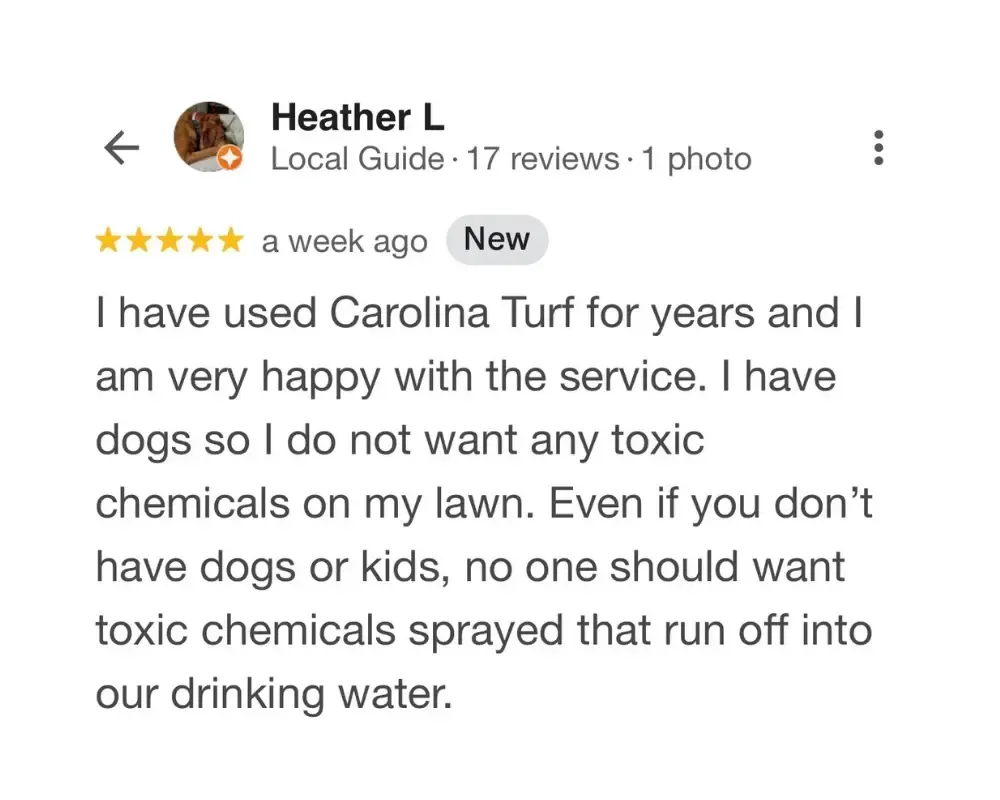
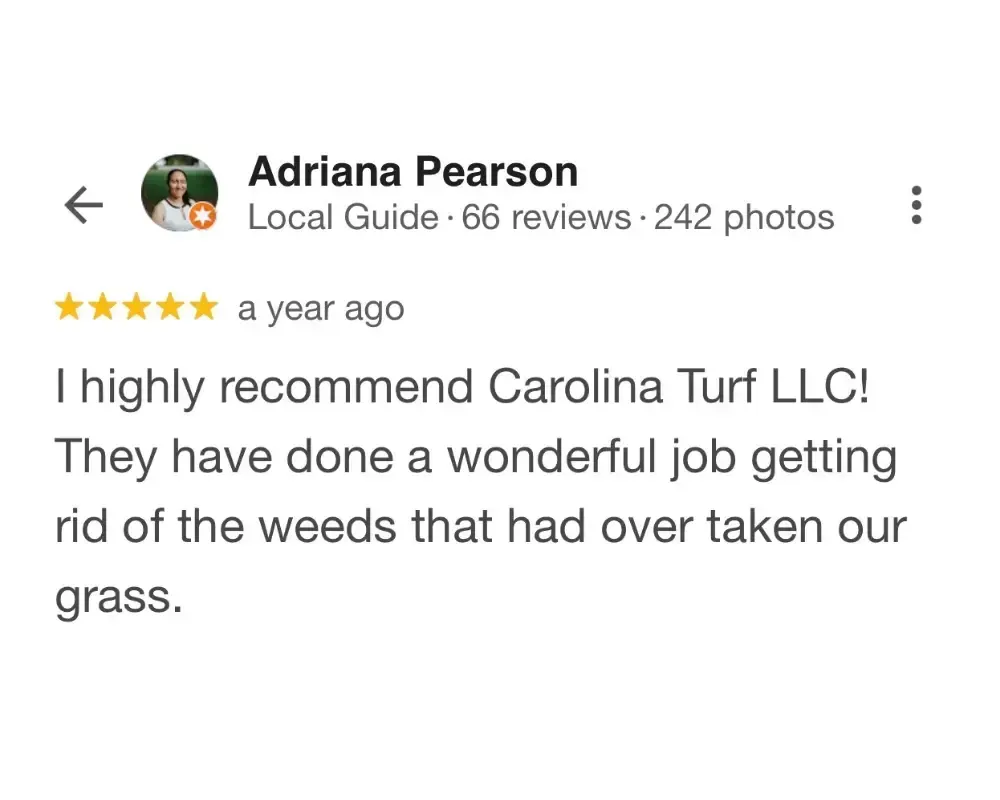
We’ve been using only organic products since 2018, and our customer base in the Raleigh area has been steadily, then rapidly, growing. Here are testimonials directly from our customers:
Creating a Healthy Home Base
Ultimately, the decision of what to use in your yard is a personal one, but it’s one that affects everyone living under your roof. A beautiful lawn shouldn't come at the expense of your peace of mind or your family's long-term wellness.
You don't have to choose between a beautiful yard and a healthy family. Let’s stop treating the lawn like a chemistry project and start treating it like a living part of your home. Our prices are listed on
our services page, and you can sign up online without waiting for a quote.