Armyworms or Brown Patch? How to Tell What's Damaging Your Lawn
After weeks of rain and the recent arrival of Tropical Storm Chantal, two major lawn concerns are on our radar: brown patch and armyworms.
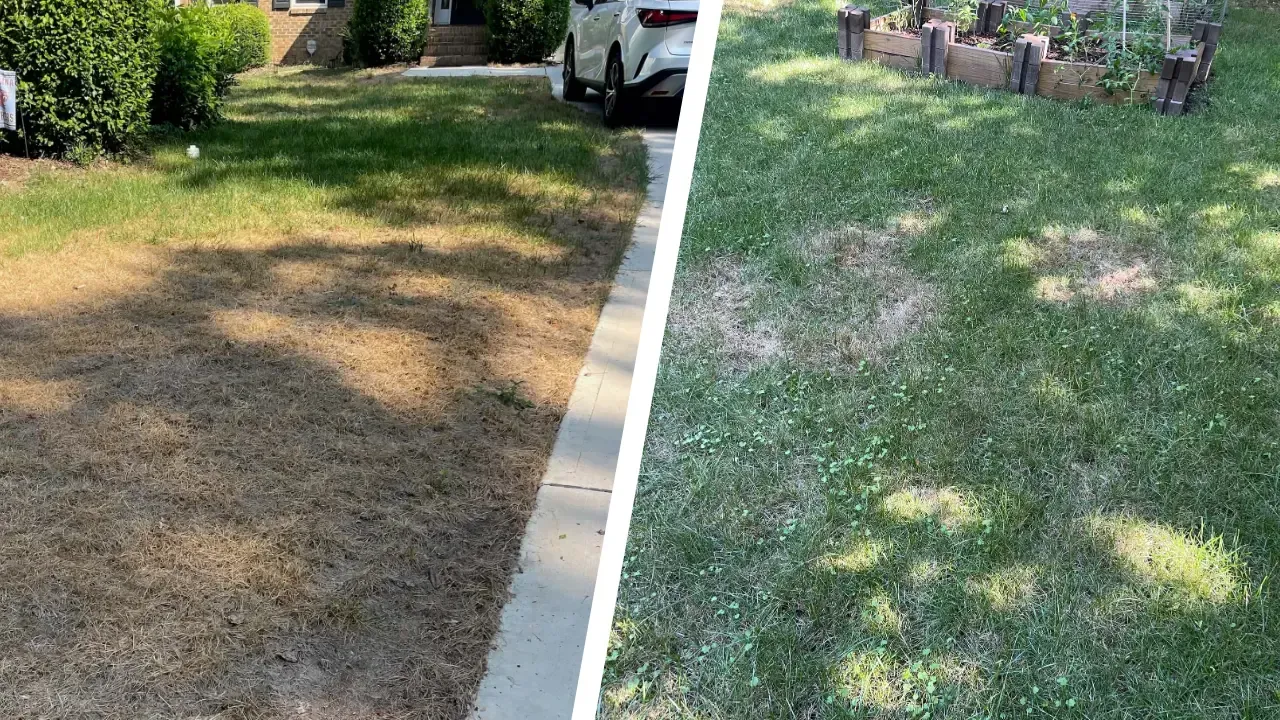
Both can result in significant damage to your lawn, but they’re entirely different issues. The treatments are different, too, which makes correct identification important. Here's how to tell the difference and what to do next.
Brown Patch
A fungal disease that thrives in wet summer conditions
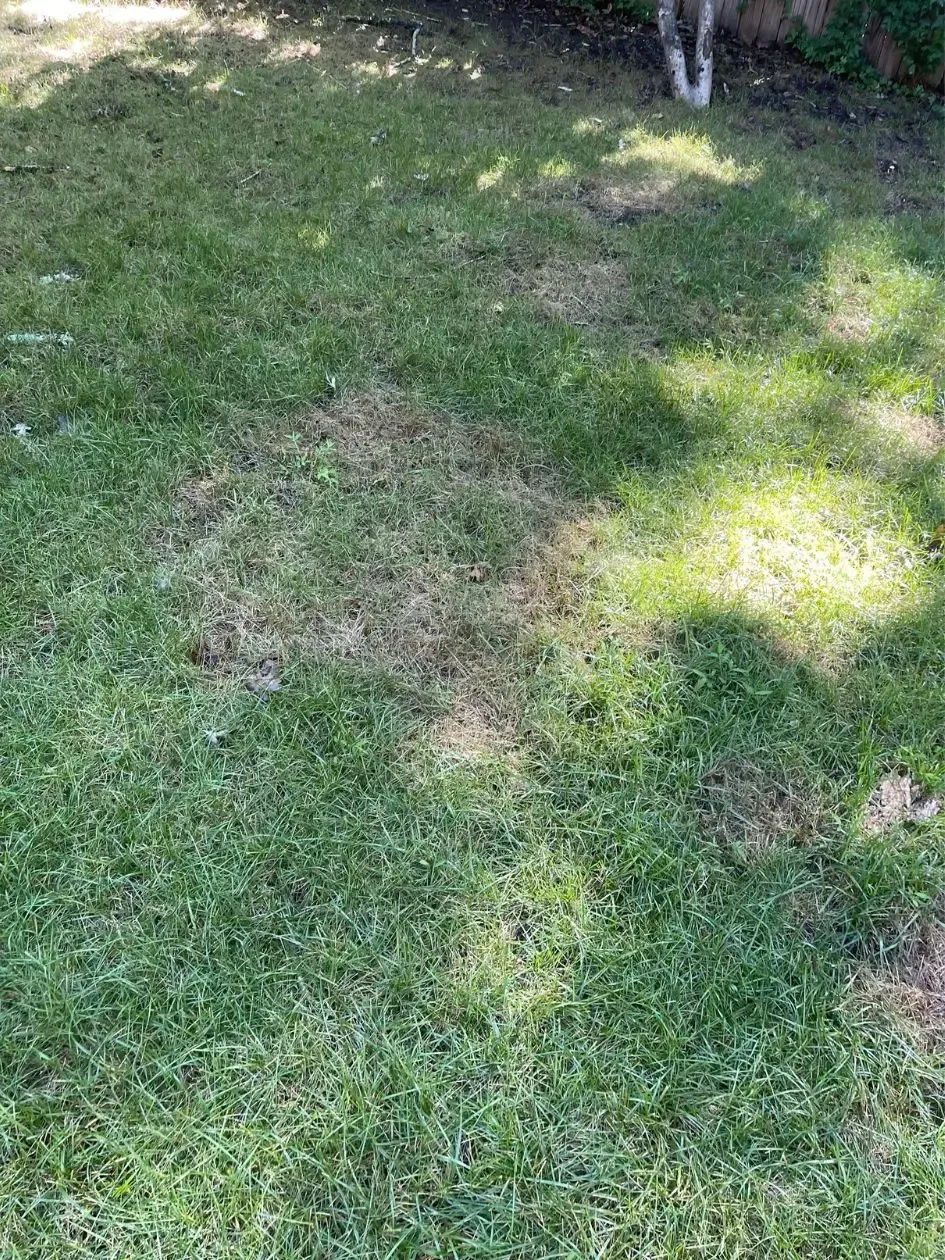
Brown patch is a fungus that develops when moisture lingers on grass blades for extended periods, especially overnight. It's common during hot, wet weather like we’ve seen recently.
It usually appears as round or irregular patches of browning turf, with some areas thinning out completely. While it may spread gradually, it doesn't usually cause drastic changes overnight.
What to Look For in Brown Patch:
- Circular or blotchy patches of brown or tan grass
- Lesions on individual grass blades—tan with darker borders
- A faint gray or dark brown ring (sometimes called a "smoke ring") around the outer edge of a patch
- A greasy or matted texture in the morning due to moisture
- No visible insects present
Brown patch can weaken the lawn and invite weeds, especially if left untreated through the peak summer months.
How We Treat It Brown Patch
We use an organic fungicide that targets the disease without disrupting soil biology. In addition to treatment, we may recommend adjustments to watering schedules or mowing height to help prevent recurrence.
Armyworms
Insect larvae that feed aggressively on grass blades
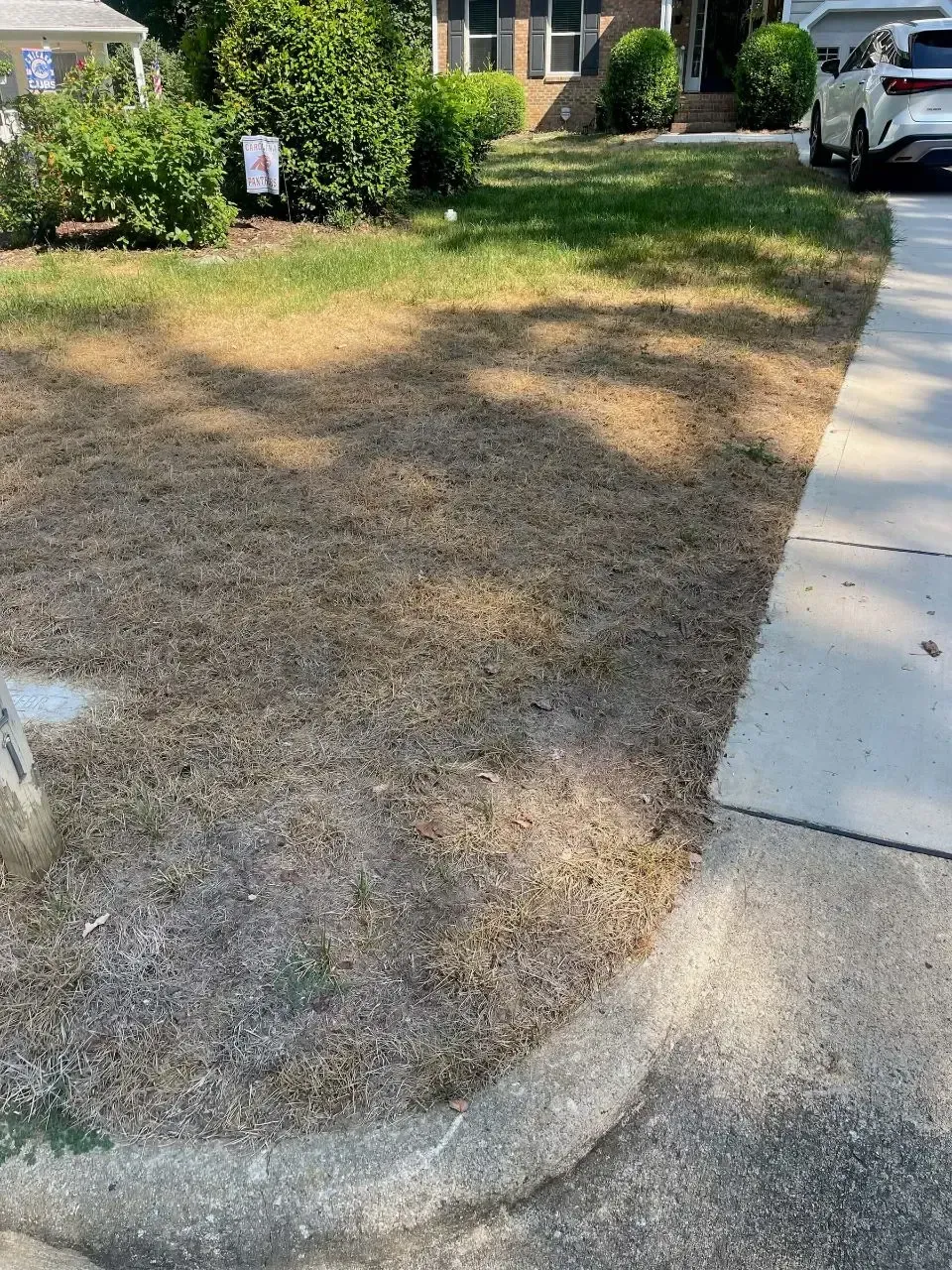
Armyworms are the larval stage of a moth species that often gets carried into our area on the winds of tropical storms. In 2024, Tropical Storm Debby brought an armyworm infestation that rapidly destroyed lawns, systematically spreading from lawn to lawn on a whole street. This year the conditions are right and Tropical Storm Chantal could have brought moths into the region.
These moths lay eggs that hatch into hungry larvae. Armyworms feed on grass blades, chewing them down to the stems and causing visible brown areas to appear quickly.
What to Look For in Armyworm Infestation:
- Large, irregular brown patches that develop rapidly
- Chewed or ragged grass tips, with stems left behind
- Worms (about 1–1.5 inches long) crawling on the lawn in early morning or late afternoon
- Birds gathering and pecking at the lawn, often feeding on the worms
Armyworm damage can seem to come out of nowhere, particularly in newly mowed areas or along lawn edges, where the grass is shorter, more tender, and easier for the larvae to consume. Mowing also exposes more of the soil and crown, giving the worms easier access. Lawn edges—especially near driveways or sidewalks—tend to be warmer and drier, making them attractive to moths for egg-laying. These areas are often where infestations start before spreading inward.
How We Treat Armyworms
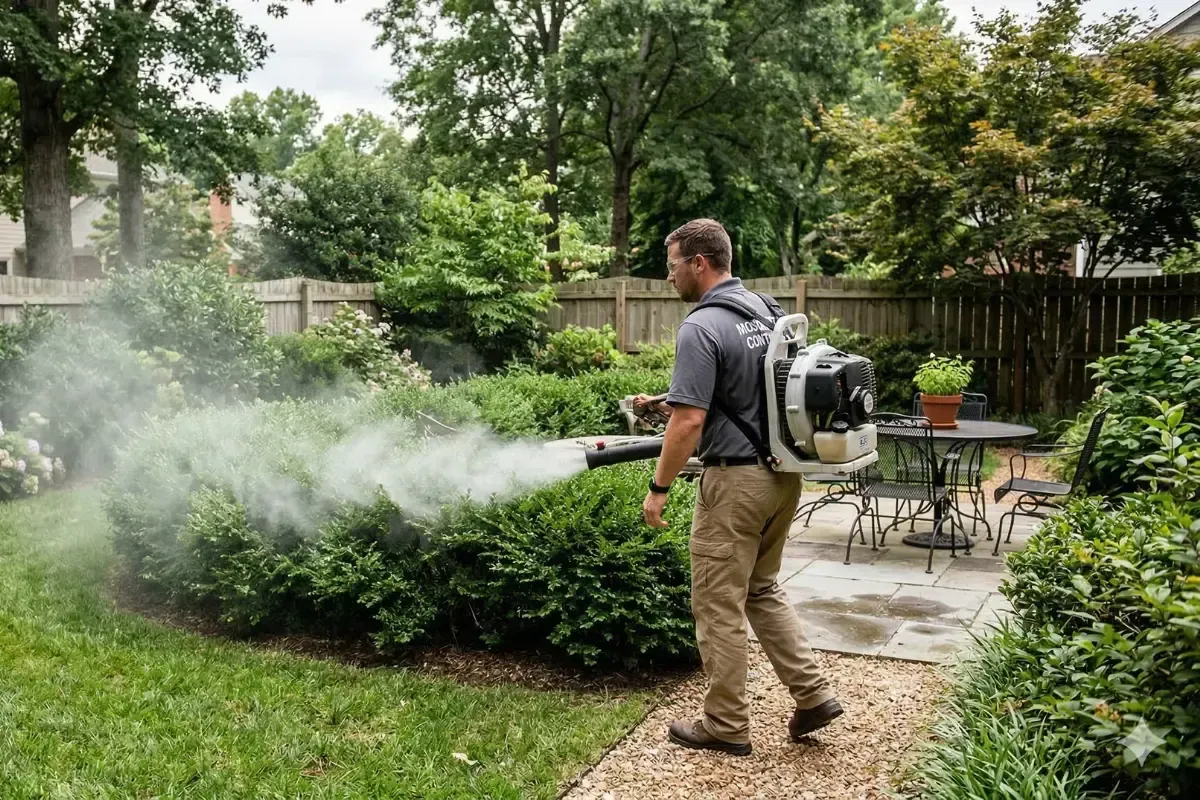
Our organic neem oil treatment is applied using a fogger for even coverage across the lawn. Neem oil, derived from the seeds of the neem tree, contains a natural compound called azadirachtin that disrupts the armyworm’s hormonal systems. It interferes with their ability to eat, grow, and molt, eventually causing them to stop feeding and die off.
Unlike synthetic insecticides, neem doesn’t kill on contact—instead, it works gradually by targeting the pest’s lifecycle. It’s a botanical, organic solution that’s safe to use around children, pets, and beneficial insects like bees and butterflies when applied correctly. We recommend monthly treatments to help prevent re-infestation if conditions allow the life cycle to continue.
Armyworm Lifecycle
Understanding the life cycle helps explain how infestations can reappear.
- Eggs are laid on grass or nearby plants and hatch in 2–5 days
- Larvae (armyworms) feed heavily for 2–3 weeks
- Pupation happens in the soil for 7–14 days
- Moths emerge, live about 9–14 days, and lay more eggs
Several generations can occur in one season if temperatures remain warm, which is why timing treatments correctly is important. Armyworms go dormant below 50°F and usually don’t survive the first hard frost.
How to Tell the Difference Between Armyworms and Brown Patch
| Armyworms | Brown Patch | |
|---|---|---|
| Cause | Insect larvae | Fungus |
| Damage speed | Fast, can happen overnight | Gradual, often over days |
| Patch shape | Irregular or streaky | Round or blotchy |
| Visible signs | Worms, chewed tips, bird activity | Discoloration on blades, no pests |
| Treatment | Neem oil fogger application | Organic fungicide |
What You Should Do Now
If you're seeing brown areas in your lawn—especially if they’ve developed recently—take a closer look. Use the images above to compare what you’re seeing with the common signs of brown patch and armyworms.
If you're unsure or want to start treatment before things get worse, reach out and we’ll get you on the schedule. Our organic treatments are safe, effective, and tailored to the specific issue, whether fungal or insect.
You can sign up for service on our website by filling the service request form on our
services page.