How to Get Rid of Weeds Without Killing Grass Naturally
Learn how to get rid of weeds without harming your grass using natural methods. Explore how healthy soil, strong roots, and organic weed control create a resilient, chemical-free lawn.
If you’ve ever stared at a patch of crabgrass choking out grass, you know the frustration weeds bring to a lawn you’ve worked hard to maintain. But reaching for a bottle of poisonous weed killer may solve one problem while creating others, especially if you're aiming for a healthy, resilient, and chemical-free lawn. Luckily, there is a natural way how to get rid of weeds without killing grass naturally, but it starts below the surface.
Healthy Soil is Your First Line of Defense
Weeds thrive in stressed-out soil. Compacted ground, nutrient imbalances, and poor microbial activity all create the kind of gaps weeds love to exploit. Instead of seeing weeds as invaders, think of them as messengers. Dandelions, for instance, often show up in compacted soil because their deep taproots can break through tough layers. Clover tends to appear where nitrogen is low, acting as nature’s band-aid by fixing nitrogen from the air into the soil. By the way, we know clover lawns are popular now, so if you’re curious, check out our article,
Clover Lawns Pros and Cons.
To outcompete weeds naturally, your lawn needs to be more than just green on top. It needs living, thriving soil underneath. That means soil teeming with earthworms, fungi, beneficial bacteria, and organic matter. Without that ecosystem, your lawn is just a surface: vulnerable, brittle, and easily overtaken.
Stronger Grass Roots Crowd Out Weeds
One of the most effective ways to reduce weed pressure is to grow a thicker, deeper-rooted lawn. Strong roots develop when soil is aerated, organically enriched, and consistently fed the right nutrients. Grass that grows deep roots is better equipped to draw moisture in dry spells and crowd out shallow-rooted weeds. The most common lawn weeds—like crabgrass, spurge, and chickweed—are opportunistic and typically have shallow root systems, making them easier to outcompete with dense, well-established turfgrass.
When we apply an organic fertilizer in the form of compost tea, we’re not looking for an overnight change in color that you would get with synthetic fertilizer. We’re feeding the soil so it can feed the grass. Over time, this encourages root growth, improves structure, and supports the soil life that keeps your lawn balanced.
Why Synthetic Fertilizers Give You Fast Color—but Little Else
Synthetic fertilizers often contain high concentrations of nitrogen, one of the three key macronutrients in plant growth. Nitrogen encourages top growth—think green blades shooting up quickly after application. But that spike in growth can be misleading.
Excess nitrogen leads to fast, shallow growth. Roots don’t have time to develop. Plus, when nitrogen isn’t absorbed by plants, it can leach into waterways or evaporate into the atmosphere. That quick green-up comes at a cost. Synthetic fertilizers feed the grass directly, bypassing the living soil ecosystem. Over time, this can disrupt microbial life, reduce natural nutrient cycling, and leave your lawn dependent on repeated chemical applications to stay green. Even earthworms may start to disappear when the soil no longer offers the organic matter and microbial life they need to thrive.
Organic fertilizers, on the other hand, release nutrients slowly. They help build stable humus—the rich, dark material formed from decomposed organic matter—and support the biology of your lawn. Rather than feeding the plant directly, they feed the soil life, which then makes nutrients available to your grass in a more natural rhythm.
Understanding Weed Control: Why Your Grass Survives and Weeds Don’t
Here’s where it gets a little scientific, but stick with us, it matters.
Grasses are “monocots,” meaning they have one seed leaf and their growing points are protected at the base, close to the soil. Most common broadleaf weeds are “dicots,” with two seed leaves and exposed growing tips.
That’s why many natural weed control treatments, including the one we use at Carolina Turf, can target broadleaf weeds without harming the grass. Our formula uses naturally derived ingredients like soybean oil, salt, soap, and citric acid. These ingredients break down the outer layers of broadleaf weeds and disrupt their internal processes. Since the growth center of grass is tucked safely at the base, it can withstand treatments that destroy weeds on contact.
How Natural Weed Control Actually Works
Our organic weed control spray is designed to work with nature, not against it. Soybean oil helps smother weeds by coating the leaves and blocking essential functions. Citric acid lowers the pH on the leaf surface, disrupting the cell walls. Salt and soap strip away protective waxes and cause dehydration. Together, these ingredients weaken and dry out unwanted plants, without leaving behind toxic residue.
While you CAN kill weeds with traditional, toxic herbicides like 2,4-D, dicamba, atrazine, and others, they’ll kill a lot more than just weeds on their path. Studies have linked these chemicals to hormone disruption, reproductive issues, and increased cancer risk in humans and animals. They’re also known to harm aquatic ecosystems, leach into groundwater, and reduce biodiversity by impacting pollinators, soil microbes, and beneficial insects that keep your yard’s ecosystem in balance.
It’s Not Just What You Kill, It’s What You Keep Alive
We talk a lot about what’s growing in the lawn, but what about what’s living in it?
Healthy lawns aren’t sterile. They’re alive with worms, microbes, and tiny insects that all play a role in soil health. Earthworms aerate the soil and help break down organic matter into plant-available nutrients. Fungi form symbiotic relationships with grass roots, helping them draw in water and minerals.
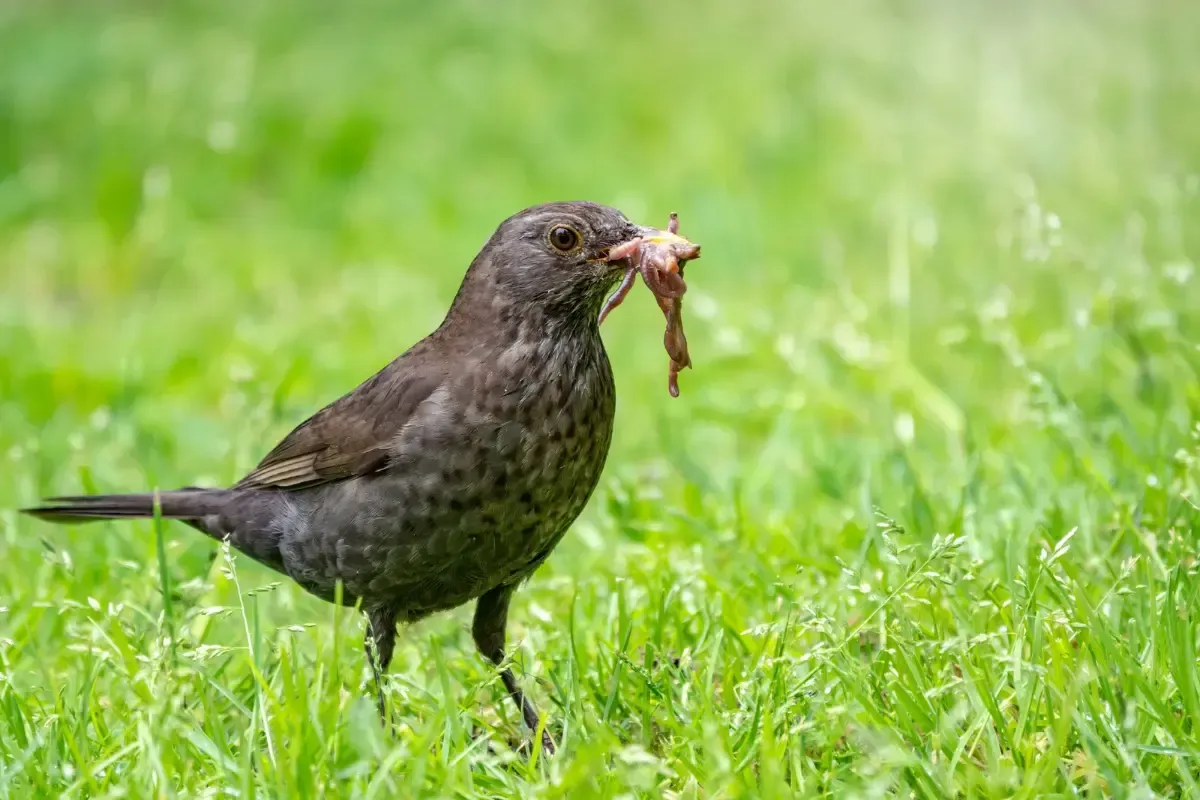
If you’ve never seen birds pecking at your lawn, there’s a good chance there is nothing there for them to eat. Birds feed on insects and worms, and they’ll skip a yard that doesn’t offer much. Noise, movement, birdsong, and fluttering wings can actually be signs that your soil is working.
On the flip side, unhealthy lawns with poor soil biology are more likely to attract pests like fire ants, which prefer dry, compacted soil with little competition from other organisms. A thriving, biodiverse lawn makes it harder for fire ants to take hold. If you’re experiencing this problem, read more in our article,
How to Get Rid of Fire Ants Naturally.
Why Organic Weed Control Takes Longer, but Leaves You Better Off
Weed control isn’t a one-and-done job. Even traditional chemicals don’t prevent new seeds from germinating. What they do is knock everything back, fast—often including the beneficial organisms you want to keep. They work like a crash diet. Sure, the results are fast. But they’re not sustainable.
Organic methods are more like a long-term investment. They take time because they work with living systems—improving soil structure, supporting microbial life, and helping grass grow deeper, more resilient roots. It might take a couple of seasons to build that ecosystem and crowd out aggressive weeds. But over time, your lawn becomes easier to manage. You’ll still need to care for it, but you’re building a foundation that’s more balanced, less chemically dependent, and better equipped to handle stress.
Getting Rid of Weeds Without Killing Your Grass
Hopefully by now you have a little better understanding of how organic weed control and fertilization work. At Carolina Turf we work with the whole system. We aerate to loosen compacted soil and overseed your grass to help it thrive. We use organic fertilizers to feed the microbes and build root mass. We apply organic weed treatments regularly to suppress weeds without compromising the health of the soil.
Getting rid of weeds without killing your grass is absolutely possible if you're willing to take the long view. Start with healthy soil. Support deep root growth. Feed the lawn with organic nutrients. And use natural weed control to manage problem areas without wrecking the ecosystem that keeps your lawn thriving. It may take a little longer, but your reward is a lawn that’s not just green on the surface, but alive from the ground up.